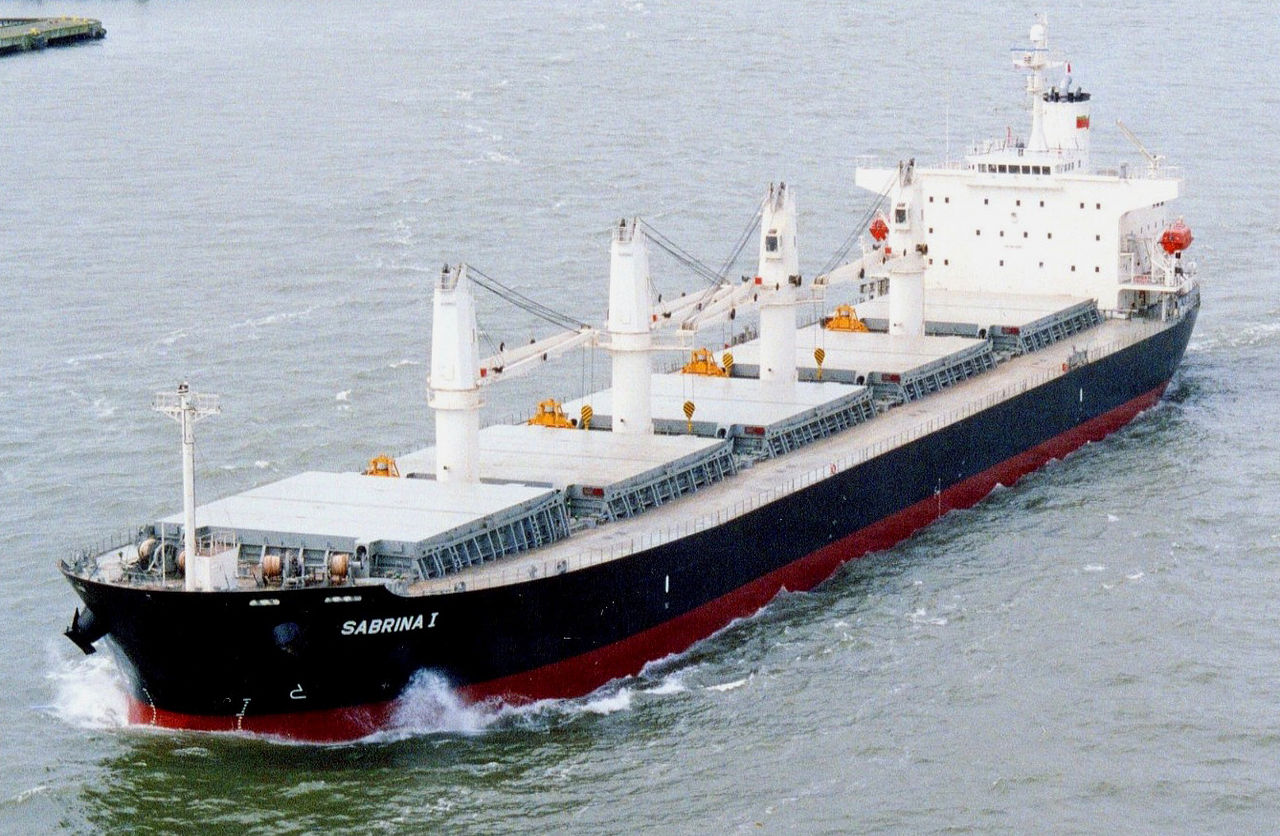
Container ships are the most common type of merchant vessel in the global shipping fleet, carrying over 60% of the world's seaborne trade by value. From small feeder vessels serving regional ports to ultra-large container vessels exceeding 400 meters in length, these ships form the backbone of international commerce [UNCTAD, 2023]. Working on a container ship offers fast-paced operations, frequent port calls, and exposure to the most visible segment of the maritime industry.
This article provides an in-depth look at container ships, including their design, classification, cargo operations, crew life, and career opportunities.
What Is a Container Ship?
A container ship is a cargo vessel designed to carry standardized intermodal shipping containers. These containers, typically 20-foot (TEU) or 40-foot (FEU) in length, can be transferred seamlessly between ships, trucks, and trains without unloading the contents. This standardization revolutionized global trade by dramatically reducing loading times and cargo handling costs.
The first container ship, the Ideal X, sailed in 1956 carrying just 58 containers. Today, the largest container ships carry over 24,000 TEU — equivalent to the cargo capacity of 1,000 traditional break-bulk vessels [ICS, 2023].
Container Ship Classification by Size
Container ships are classified by their TEU (Twenty-foot Equivalent Unit) capacity, which determines the trade routes they can serve and the ports they can access.
| Class | TEU Capacity | Length | Typical Route |
|---|---|---|---|
| Feeder | 100–1,000 TEU | 150–200 m | Regional / inter-island |
| Feedermax | 1,000–2,000 TEU | 200–250 m | Short-sea / coastal |
| Panamax | 2,000–5,000 TEU | 250–290 m | Original Panama Canal transit |
| Post-Panamax | 5,000–10,000 TEU | 290–350 m | Major east-west routes |
| Neo-Panamax | 10,000–14,500 TEU | 350–366 m | Expanded Panama Canal |
| Ultra-Large (ULCV) | 14,500–24,000+ TEU | 366–400+ m | Asia-Europe, Asia-USWC |
The largest container ships in service include the MSC Irina (24,346 TEU), Evergreen's Ever Alot (24,004 TEU), and HMM Algeciras (23,964 TEU). These vessels are too large to transit the Panama Canal and serve only the deepest ports on Asia-Europe routes.
Key Design Features
Modern container ships are engineered for maximum cargo capacity, fuel efficiency, and rapid turnaround.
- Cellular holds: The cargo area is divided into vertical cells that guide containers into place, eliminating the need for lashing in the holds
- Deck stacking: Containers are stacked 6–10 high on deck, secured by twist locks and lashing rods
- Bridge forward design: The accommodation and bridge are located forward or one-third aft, maximizing cargo space
- Dual-fuel engines: Many newbuilds operate on LNG or methanol to meet IMO 2030 emissions targets [IMO, 2023]
- Ballast water treatment: Required under the Ballast Water Management Convention to prevent transfer of invasive species
- Reefer (refrigerated) plug-ins: Hundreds of electrical sockets for temperature-controlled containers on deck
Cargo Operations
Cargo operations on container ships are the fastest of any vessel type, with modern cranes handling 30–40 containers per hour. A 10,000 TEU vessel can be fully discharged and reloaded in 24–48 hours.
The cargo operation sequence:
- Arrival: The vessel berths and gangway is secured
- Discharge: Quay cranes remove outbound containers in reverse stowage order
- Reefer monitoring: Temperature data is downloaded and reefer units inspected
- Loading: Inbound containers are loaded according to the stowage plan
- Lashing: Deck containers are secured with twist locks and lashing rods
- Departure: Bunker survey, crew sign-on/off, documentation completed
The Chief Officer is responsible for cargo planning and stowage using specialized software (e.g., MACS3, LoadStar). A poorly planned stowage can cause excessive list, hull stress, or wasted capacity.
Working on a Container Ship
Deck Department
The deck department on a container ship manages navigation, cargo operations, and maintenance. The work pace is driven by the vessel's schedule — typically 14–21 day round trips on major routes.
- Watchkeeping: Standard 4-on, 8-off watches while at sea
- Port calls: Every 2–5 days, requiring cargo planning, surveyor meetings, and documentation
- Maintenance: Paint touch-ups, lashing gear inspection, safety equipment checks
- Drills: Weekly fire, abandon ship, and man-overboard drills
Engine Department
The engine department maintains the main engine, auxiliary engines, and all shipboard systems. Container ships operate at high speeds (up to 25 knots), placing significant demands on propulsion systems.
- Main engine: Large two-stroke diesel engines (up to 80,000 kW) burning heavy fuel oil or LNG
- Auxiliary engines: 3–5 generator sets providing electrical power for reefer containers and ship systems
- Shaft generators: Used to generate electricity from the main engine's rotation at sea
- Maintenance schedule: Planned maintenance during port stays and longer repairs during dry docking every 5 years
Crew Composition
A typical 10,000 TEU container ship carries 22–25 crew members:
- Deck: Master, Chief Officer, 2nd Officer, 3rd Officer, Bosun, 2–4 ABs, 1–2 OS
- Engine: Chief Engineer, 2nd Engineer, 3rd Engineer, 4th Engineer, ETO, Fitter, 2–3 Oilers
- Catering: Chief Cook, Steward
Advantages and Challenges
Advantages
- Frequent port calls: Crew can experience different countries and cultures on every voyage
- Fast turnaround: Short port stays mean more time for shore leave
- Modern vessels: Container ships are typically newer and better maintained than other types
- Predictable schedules: Fixed routes allow crew to plan leave periods in advance
- Good shore connectivity: More satellite bandwidth for crew internet than most other ship types
Challenges
- High pressure: Tight schedules and strict departure deadlines create stress
- Lashing work: Deck crew spend significant time securing and releasing deck containers in all weather conditions
- Container loss: Rough weather can cause stacks to collapse, resulting in dangerous deck conditions
- Quick rotations: Short port stays limit rest opportunities during cargo operations
Frequently Asked Questions
How many containers can a ship carry?
The largest container ships can carry over 24,000 TEU (twenty-foot equivalent units). In practical terms, this represents 12,000–18,000 actual containers depending on the mix of 20-foot and 40-foot units.
How fast do container ships travel?
Container ships have service speeds of 18–25 knots. Ultra-large container ships on Asia-Europe routes typically operate at slower speeds (16–18 knots) to reduce fuel consumption, a practice known as "slow steaming."
How many crew are on a container ship?
Crew size ranges from 15 on small feeder vessels to 25–30 on ultra-large container ships. Automation and advanced technology have reduced crew requirements significantly over the past 20 years.
Is container ship work dangerous?
Container ship work involves moderate risks, primarily from lashing operations in adverse weather, working at height on container stacks, and exposure to heavy lifting equipment. However, strict safety protocols and continuous training minimize these risks.
What is the best container ship company to work for?
Major container shipping companies include Maersk, MSC, CMA CGM, COSCO, Hapag-Lloyd, ONE, Evergreen, HMM, Yang Ming, and ZIM. Working conditions, pay, and career development vary significantly between companies.
Conclusion
Container ships are the workhorses of global trade, offering seafarers fast-paced operations, frequent port visits, and exposure to the most technologically advanced segment of the maritime industry. While the demanding schedules and tight deadlines present challenges, the predictable routes, modern vessels, and diverse experience make container ships an excellent choice for deck and engine officers alike.
References & Citations
- [UNCTAD, 2023] United Nations Conference on Trade and Development. "Review of Maritime Transport 2023."
- [ICS, 2023] International Chamber of Shipping. "Shipping and World Trade Statistics 2023."
- [IMO, 2023] International Maritime Organization. "IMO Greenhouse Gas Study 2023."
- [IMO, 2004] International Maritime Organization. "International Convention for the Safety of Life at Sea (SOLAS) — Chapter VI: Carriage of Cargoes."